Author: Tsvi

  • Tangerines Wins Silver at the 2025 Moonbeam Children’s Book Awards

    Tangerines Wins Silver at the 2025 Moonbeam Children’s Book Awards

    I’m honored to share that Tangerines received the Silver Medal in the Pre-Teen, Mature Issues category at the 2025 Moonbeam Children’s Book Awards.

    The Moonbeam Awards celebrate books that inspire a love of reading and reflect the spirit of childhood. It’s deeply meaningful for me to see Tangerines recognized among works that champion imagination, compassion, and emotional honesty.

    At its heart, Tangerines is the diary of ten-year-old Gilly, a curious and tender observer of her small but complicated world. Through her eyes, we glimpse the wonder and ache of growing up—her belief that even the smallest prayers, carved hearts, and made-up words can mend what’s been lost.

    Readers have described Tangerines as “a warm hug” and “a story that feels like quiet therapy,” praising its mix of innocence and depth. One reviewer wrote, “It’s messy, funny, heartbreaking, and full of those weirdly specific thoughts only kids seem to have.” Another called it “a book that adults need as much as children do.”

    You can find many more reviews here. Each one felt like a small gift when it arrived.

    This award is as much a celebration of Gilly’s world as it is of everyone who believed in it—readers, listeners, and reviewers who saw in her story a reflection of their own childhood questions.

    Thank you to the Moonbeam Children’s Book Awards for this honor, and to everyone who’s joined Gilly and Oggy under the tangerine tree.

    —Tsvi Jolles
    Author of Tangerines (Brave Fawn Books)
    Silver Medalist, 2025 Moonbeam Children’s Book Awards

  • Notable Quotes from Apricots

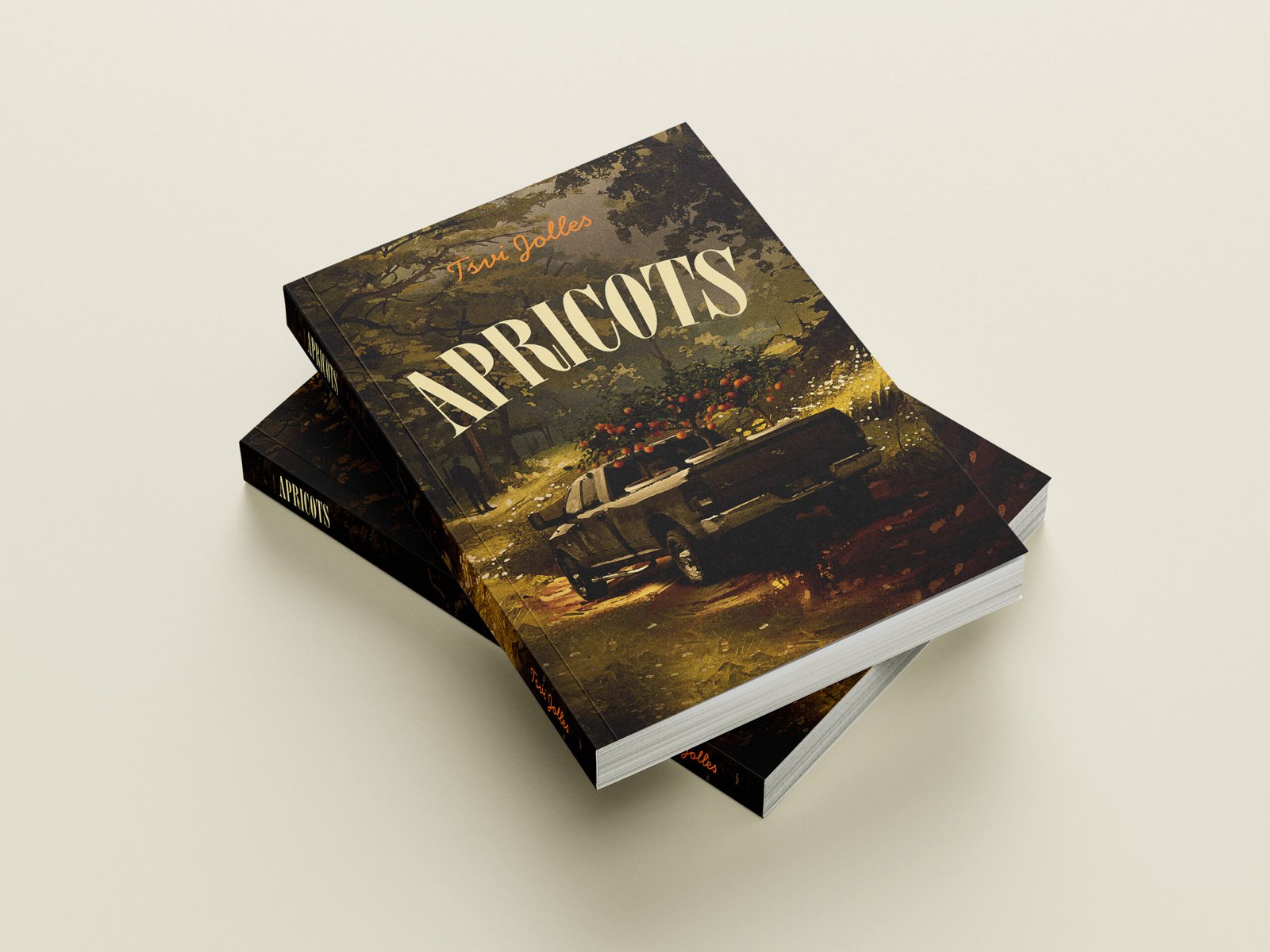
    apricots cover
    • “What’s funny about the things that stay the same is that if you look close—really close—you start to see how they’ve changed, too. Or maybe you changed right along with them. Like you and everything else moved a little each day—but nobody said a word about it, so it feels like nobody moved at all.” (The Quiet Things That Stay)
    • “Sometimes the bravest thing isn’t wrestling a monkey or sneaking through the forest at night. Sometimes it’s walking through a door you used to be too scared to open. And finding out it still opens just fine.” (Paper Boats in the Soft Light)
    • “The silent road always has more branches on the ground, pits, holes, thorns, nettles, brambles, and tangly vines—plus wasp nests in the trees, under the leaves, or dangling from the darkest corners. So, yes, it’s tempting to choose the other one—the smooth, easy-looking path that keeps saying, Come here, come here. But if you pick the thorny road—the one that doesn’t call you in—a strange thing happens. You get scratched, you get bruised, you get muddy … but the deeper you go, the better you feel.” (Paper Boats in the Soft Light)
    • “You imagine the worst things first—even when there’s no sign they’ll happen.” (Dark Chocolate and Persimmons, Mrs. Karabach to Gilly)
    • “When you have too many thoughts storming inside, always try to choose the one that makes you feel calmer—and ditch the troubling one. If you practice that, Gilly, I promise you, everything will start to feel a little lighter.” (Dark Chocolate and Persimmons, Mrs. Karabach to Gilly)
    • “Some stories we never hear can have more effect on our lives—and on the lives of those around us—than the ones we do. Isn’t that the strangest kind of magic?” (Bad Star Constellation)
    • “The one reader you truly owe everything to—the only one who really understands what you’re writing, and why, and for who—is you. And if you ever turn your back on that loyalty to yourself, then every word you ever write down will be just a puncake lie.” (A Story for Me)
    • “His whole heart was with Oggy. It’s also my reason to believe he didn’t actually poison his new brother. We were just caught in the panic of it all.” (The Song I Never Sang, Gilly about Monty)
    • “Oggy will return. No need to worry. But the crying—that’ll be both your friend and your enemy. Don’t fight it. Accept it. Please. For your own good.” (The One Called Nine, Nine to Gilly)
    • “No suffering for free.” Which means that if you have to suffer—like from a body ache or your soul being tormented—one day, somehow, it’ll turn into something good. Something surprising. Something worth it.” (No Free Lunch)
    • “Because when you read a book, your brain doesn’t think you’re alone or lost. It thinks you’re part of something that’s moving, changing, doing things. So in that way, reading is its own kind of compass. It points you somewhere—you’re just not sure if that somewhere is north, or maybe someplace warmer.” (Writing from the Bottom of the Forest)
    • “What a horrible sentence to write. But I wrote it—and ever since everything that happened, I’ve decided not to erase what I write. Just learn to read it the way it is, until it stops hurting so much.” (The Way It Is, Gilly about Monty’s aim)
    • “And how, even from a distance, he felt more like home than almost anyone else. Which is a strange thing to realize while holding hands with your best friend.” (Three Popsicles, Gilly about Monty)
  • A Companion to Apricots and The Gilly Diaries

    A guide for teachers, students, parents, and curious readers who want to explore the world of Gilly more deeply. Learn about the characters, themes, and ideas behind “Apricots,” the second book in “The Gilly Diaries” series—where writing, wonder, and emotional growth take center stage.

    apricots alternate cover

    What is “Apricots” and how does it relate to “The Gilly Diaries” series?

    “Apricots” is the second book in “The Gilly Diaries” series, written by Tsvi Jolles. It continues the story of Gilly, a young girl who chronicles her experiences and thoughts in her diary. The first book in the series is titled “Tangerines,” which introduces readers to Gilly’s world, her close relationship with her father, and her adventures with her best friend, Oggy. “Apricots” delves deeper into Gilly’s life, introducing new characters and exploring more complex emotional themes.

    Who is Gilly, the protagonist of “Apricots,” and what are some of her defining characteristics?

    Gilly is a perceptive and sensitive 10-year-old girl who expresses herself profoundly through her diary. She has a deep connection with nature, particularly her tangerine tree, Orti, and the surrounding forest. Gilly is observant, imaginative, and enjoys counting things. She values honesty and is fiercely loyal to her loved ones, especially her best friend, Oggy, and her father. Despite facing challenges and emotional complexities, she possesses a remarkable resilience and an innate ability to find wonder and magic in the world around her. She often processes her experiences and emotions through writing, creating stories, and engaging in “tangerine meditations.”

    What is the significance of the “apricot trees” in the story?

    The six apricot trees planted in Oggy’s garden are a symbolic gift from Mr. Bloom to Mrs. Bloom and their new foster son, Monty. They represent an attempt to make Monty’s transition into the Bloom family easier, as he used to care for an apricot grove in his previous foster home. The trees also become a point of contention and a marker of change within the narrative, particularly in relation to Oggy’s feelings about Monty’s arrival and the shifts in family dynamics. Gilly also associates apricot jam with feelings and finding romantic love, suggesting a broader symbolism of sweetness and connection.

    Who are the key characters in Gilly’s life and what are their relationships to her?

    Gilly’s life is populated by a vibrant cast of characters:

    • Mom: Gilly’s mother, who, despite her own struggles, is a source of comfort and support. She is protective and intuitive about Gilly’s feelings.
    • Dad (Ari): Gilly’s father, who lives separately from them but maintains a special bond with Gilly through their Tuesday visits. He is sensitive, and Gilly sees a deep connection between his experiences and her own.
    • Oggy: Gilly’s best friend and “soul sibling.” He is boisterous, imaginative, and often makes up words and rules for games. Their friendship is a central pillar of Gilly’s life.
    • Gilma: Gilly’s newborn baby sister, whose arrival brings both joy and new dynamics to the family.
    • Mississippi, Odelia, and Eternity: Friends of Gilly’s mother, who are significant adult figures in Gilly’s life, often playing cards together. Mississippi, in particular, acts as a supportive, older-sister figure to Gilly and offers life advice.
    • Monty: Oggy’s new older foster brother. He is a musician, initially seen as quiet and perhaps troubled, but Gilly develops a complex understanding of him. His presence significantly impacts the Bloom family and Gilly’s own life.
    • Elis: The gardener, whose presence becomes increasingly significant and complex throughout the narrative, especially in connection to Gilly’s mother and the dramatic events that unfold.
    • Mrs. Karabach: Gilly’s creative writing teacher, who recognizes Gilly’s talent and provides guidance, even if Gilly sometimes finds her advice challenging.
    • Sabigail: A yanaka (a unique forest creature resembling a llama), who is Gilly’s loyal animal companion and confidante.
    • Nine: A mysterious man who lives in a cave, a keeper of books and stories, who reveals hidden truths about Gilly’s father.
    • Jim: The mailman, a seemingly ordinary character who unexpectedly shares his own story of loss and connection with Gilly.

    What are some of the main themes explored in “Apricots”?

    “Apricots” explores several profound themes:

    • Change and Acceptance: Gilly frequently grapples with changes in her life, from her mother’s new baby and Oggy’s new brother to the shifts in relationships and personal growth. A recurring lesson from Nine is the importance of acceptance.
    • Loss and Grief: The narrative deeply addresses themes of loss, particularly the absence of Gilly’s father in her daily life and, later, the tragic circumstances surrounding his death. It also touches on Oggy’s feelings of displacement and his foster family’s past losses.
    • Family and Belonging: The book delves into the complexities of family—biological, chosen, and foster—and the search for belonging within these structures. Monty’s struggle to fit in and Oggy’s feelings about sharing his space are prominent.
    • Imagination and Storytelling as Coping Mechanisms: Gilly’s diary and her vivid imagination are central to how she processes her emotions and experiences, transforming challenging realities into manageable narratives. The act of writing itself becomes a source of comfort and understanding.
    • The Power of Words and Connection: The story emphasizes how words can shape reality, offer comfort, or cause pain. Gilly’s and Oggy’s made-up words, Mrs. Karabach’s advice, and the unexpected connections formed through conversation all highlight the power of language.
    • Nature as a Sanctuary and Metaphor: The forest, trees, and natural elements serve as a constant backdrop and a source of wisdom, calm, and metaphorical understanding for Gilly. Her tangerine tree, Orti, is a particularly important confidant.
    • Perception vs. Reality: Gilly frequently questions what is real versus what is imagined or perceived. Characters’ differing perspectives, secrets, and misunderstandings contribute to this theme.

    How does Gilly’s writing style evolve throughout the story, and what influence do her teachers and experiences have on it?

    Gilly’s writing style is a blend of childlike observation, poetic descriptions, and deep introspection. Mrs. Karabach, her creative writing teacher, encourages her to make her stories “flow” like a train to a clear destination and to use “hats and scarves” to make sentences more descriptive and cozy. While Gilly initially resists these formal suggestions, believing her “jumpy” style is authentic, her writing subtly evolves. Her experiences, especially the dramatic events surrounding Oggy and Monty, push her to record events with increasing detail and emotional depth, transforming her diary into a more cohesive narrative. She learns to use her writing to process trauma and to find truth, even when it’s painful, embodying the idea that “the one reader you truly owe everything to… is you.”

    What role does mystery and secrets play in “Apricots”?

    Mystery and secrets are integral to the plot and character development in “Apricots.” Gilly often encounters situations or learns information that is partially hidden or withheld, whether it’s the undisclosed reasons for her father’s separation, the “secret” about the apricot trees, the true nature of Monty’s past, or the circumstances surrounding Oggy’s disappearance. This constant unveiling of secrets keeps Gilly (and the reader) engaged in piecing together the full picture, reflecting the complexities of human relationships and the gradual process of understanding. Characters like Nine hold significant secrets, which, when revealed, shed new light on Gilly’s family history and personal identity.

    What is the overall message or overarching idea conveyed by “Apricots”?

    The overarching idea of “Apricots” is the transformative power of acceptance, connection, and storytelling in navigating life’s inevitable changes and challenges. Despite experiencing profound loss, uncertainty, and the complexities of growing up, Gilly learns that even in the darkest moments, there is potential for growth, understanding, and finding one’s authentic self. The book suggests that by embracing honesty in self-expression, fostering genuine connections, and learning to accept difficult truths, individuals can find resilience and moments of profound beauty, much like a thriving garden that weathers all seasons.

  • Leo’s Back, and He’s Checking In!

    Leo’s Back, and He’s Checking In!

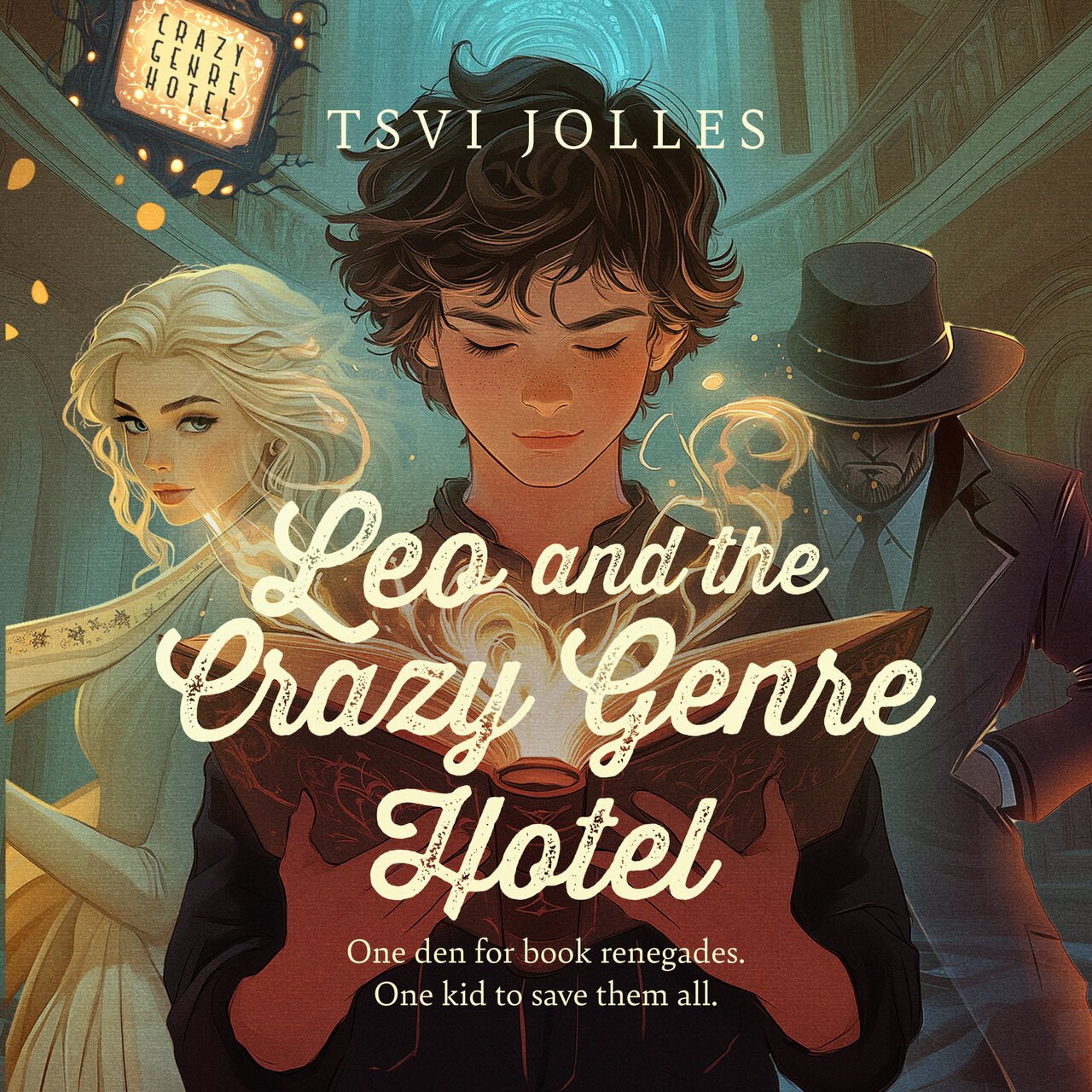
    I’m excited to share that the first chapter of my new book, Leo and the Crazy Genre Hotel, is now available on my website—not just to read, but also to listen to, with beautiful narration by Diana Bustelo.

    This is the second book in the Leo’s Magical Journeys series, and in this opening chapter, Leo arrives in Fairhope, Alabama, where a mysterious bookstore and a curious hotel job set the stage for an unforgettable summer.

    👉 Listen to Chapter One Now

    Hope you enjoy the journey,
    – Tsvi Jolles

    Check-In

    Leo scuffed the sidewalk with his worn sneakers, wandering aimlessly through downtown Fairhope, Alabama. He’d started near the hospital—that sprawling redbrick building still humming with the sharp sting of antiseptic—before crossing a sleepy intersection shaded by old oak trees stretching their limbs across the street. Pastel storefronts opened their eyes to the sleepy morning, and a bay breeze wandered through the streets, leaving trails of salt and magnolia fragrance behind.

    His mom kept saying it was a fresh start. “Un nuevo comienzo,” but to Leo, it felt more like a book with missing chapters—he had no idea how the story was supposed to go next.

    Up ahead, a large bookstore stood proudly, its wooden sign catching the morning sunlight, inviting him forward from nearly a block away.

    They had been in Fairhope for exactly two weeks. Fourteen days of living squeezed tight inside a tiny apartment, high above the street. The apartment had three little bedrooms, each hardly bigger than a closet, and a kitchen so small you had to apologize if someone else walked in. But there was a porch. And the porch was something else entirely. It overflowed with climbing aster and bougainvillea, blossoms of purple and pink tumbling down like laughter, like joy, like a promise made in flowers.

    “¡Madre mía, qué belleza!” his mom, Maria, had said when they first walked inside. She stood there, hands pressed gently to her heart, tired from the ten-hour drive from Athens, Georgia, staring at the flowers as if they had bloomed there just to welcome them—as if those bright petals alone could turn a strange place into home.

    On their first night in Fairhope, sitting in that tiny kitchen, she cooked arepas and stirred sancocho and promised homemade buñuelos soon. She talked about the hospital, about this new job, how it was their anchor. Stability, she said, as if the word itself might hold them steady. Leo understood. He knew this was her chance—maybe their only chance—to keep from drifting away. So he nodded, smiled, did his best to look hopeful. But deep inside, Leo still felt like someone watching through a window, wondering if he’d ever find a way in.

    Strolling up South Section Street, hands shoved deep in his pockets, Leo couldn’t shake the ache for Shane’s lopsided grin or those random shouts of, “Leo, come on, let’s hit the court at school!” Life felt too quiet without his best friend around.

    He reached the corner and there it was—Crossroads Books, tucked comfortably between a boutique draped in delicate ironwork and a café where the tables lounged in the dappled shade of a sprawling sycamore. Above the bookstore’s entrance, a deep blue awning sagged gently, like it had seen a thousand lazy afternoons. Leo nudged the door open, and a tiny brass bell sang out, as if it had been expecting him all along.

    The air shifted, softened. And then—oh, that smell. It drifted over him gently: books, old paper, freshly brewed coffee—warm, familiar, comforting. It pulled him back to their little Main Street bookstore in Athens, Georgia, where his mom would bring him when he was younger, letting him choose books in English or Spanish. Later, he’d wander in alone, just to sit and read quietly before a guitar lesson or to catch his breath after playing basketball at the court next door.

    He squinted into the bright Southern sunlight that stretched through the tall front windows, the letters from the sign casting “Crossroads Books” backward onto the polished floor. He stepped across them, feeling something ease inside—a quiet, unexpected comfort, like finding something he hadn’t realized was lost.

    He wandered past shelves labeled Young Adult, History, and Local Authors, recognizing familiar titles: The Hobbit and Percy Jackson. He smiled a little, remembering how Shane used to joke about them setting off with swords like Percy or following hobbits into mist-covered mountains—adventures Fairhope felt too sleepy to imagine.

    Above the register, a hand-stitched banner caught his eye. It read simply:

    Crossroads Books – Every Story Leads Somewhere.

    He wasn’t looking for anything special—mostly just passing the time until his mom finished her shift at the hospital. After drifting a little deeper into the store, he settled into a worn leather armchair by the windows. The seat creaked softly as he sank in, stretching his legs out in front of him.

    Nearby, a woman flipped through a Southern Living cookbook, chatting softly with a friend about shrimp boils and peach cobbler. Across from her, an older man wearing a faded Fairhope Pirates baseball cap stood scanning the local history shelf, tracing book spines with a finger as if hoping to spot a story he remembered.

    But something was missing. Something important. Leo looked around the bookstore, searching. There were no kids—at least, not any he could see. No clusters of teenagers flipping excitedly through graphic novels, no friendly arguments over which book had been made into a better movie, no whispered jokes punctuated by bursts of laughter. Where were they, he wondered. Where did the kids his age hide in this sleepy town?

    With a sigh, he reached for a book from the nearest display—a mystery novel whose cover depicted an old inn surrounded by twisted oak trees, a rusted wrought-iron gate hanging open and a silhouette of a figure on the porch. He started to read the first lines and kept reading next to the display, until he reached the end of the first chapter, which wasn’t a long one.

    A shift in the air carried over the warm scent of chocolate and fresh espresso from the café tucked at the back of the store, strangely pulling him out of his thoughts about the haunted inn. His stomach decided before he could even think it through—hot chocolate sounded perfect.

    He rose from the chair, crossing the shop toward the cozy café nestled in a corner. The chalkboard menu above the counter listed an array of drinks—lattes, cold brews, teas—but his eyes went straight to “Dark Chocolate Mocha” written in looping script. He ordered one, pocketing the change from his five-dollar bill, then turned to wait as the barista steamed milk behind the counter.

    That’s when he noticed the corkboard on the wall, crammed with colorful flyers—babysitting ads, guitar lessons, the local chess club. Typical small-town stuff. But one flyer, its edges curled, stood out. Unlike the others, it had no phone number, no tear-off tabs—just a message that felt oddly personal, like it was meant for him.

    TEENS WANTED
    Summer Hotel Staff Needed – 2 Months Only
    Apply In Person – Magnolia House Hotel, 12 Fairhope Avenue

    Leo’s gaze lingered on the flyer. A summer job could mean pitching in—lightening his mom’s load instead of just riding her coattails. A hotel gig, though? That hadn’t even blipped on his radar. He pictured pocketing his own cash, easing the strain of her long shifts. It’d be something, at least, for all she was pouring into this fresh start.

    His hand grazed the flyer’s edge, a quick jitter kicking in his gut. What if they didn’t even give him the job? Or worse—what if they did, and he completely messed it up? It was the same queasy, heavy feeling he’d had right before stepping onto the stage with his guitar for the Christmas talent show in sixth grade.

    But this wasn’t about music, he reminded himself. This was about doing something different. Something far outside his comfort zone.

    The door jingled as someone else walked in, catching Leo off guard. He shuffled to the side, letting a woman slip past with a quick nod as she headed toward the shelves. He glanced once more at the flyer, then tugged his phone out and typed in the address for Magnolia House Hotel.

    “Alright,” he muttered, sliding the phone back into his pocket. “Guess we’ll find out.”

    Leo grabbed his drink and headed back to that worn leather armchair by the window, sinking in as the bookstore’s soft buzz settled over him again. The mystery novel was right where he’d left it on the table. He scooped it up, skipped ahead to the next chapter, and took a sip of his hot chocolate while he read.

    The bitterness of the dark chocolate mocha lingered on his tongue, its warmth spreading through him. Outside, the world kept moving—shop doors swinging open, passersby stopping to admire the flower beds—but here, time seemed to stretch out, holding still just for a bit.

    He flipped to the next page. The story’s lead—Edwin, a hotel desk clerk—was digging into some old mystery tied up in the inn’s dusty ledgers, the kind of secret that’d been buried for years. Leo took another sip of his hot chocolate. His gaze drifted up to the corkboard where that flyer still hung, pinned to the wall.

    A hotel job. A hotel mystery. Weird coincidence.

    By the time he reached the end of the next chapter, his cup was nearly empty, and the weight of the summer job flyer still pressed in the back of his mind. Finally, he closed the book and exhaled, rubbing his thumb over the edge of the paper cup. Maybe this was a long shot. Maybe it wasn’t. But there was only one way to find out. He tossed the cup in the trash near the door and stepped outside.

    The sticky summer heat wrapped itself around him, but somehow it didn’t feel quite as heavy now. He adjusted his backpack and stepped out onto the street, weaving between shoppers drifting lazily in and out of boutiques and cafés. A couple passed by, sipping iced coffees, and an old man wearing a sunhat paused near the flower beds, squinting thoughtfully down the street. On his shirt was a bright enamel pin that said ASK ME HOW.

    Leo slowed as he approached, then stopped. “Excuse me, sir,” he said. “Am I headed the right way to Magnolia House?”

    The old man turned slowly, his brow furrowing. “Magnolia House?” He pressed his lips together, thinking. Then his face lit up, as if a door had opened somewhere deep inside him. “My wife and I were married there—1945, just after the war. The hotel was something special back then. Everybody in town dreamed of getting married at the Magnolia. Folks used to say it brought good luck, that it gave you a love that lasted.” His voice softened, drifting back to another time. “It was warm that day, just like this. My Mary wore blue. Said white was too ordinary.” He smiled gently. “She was right about that. She was right about most things.”

    Leo shifted his backpack, but the man kept going. “Mr. Carter gave a speech, welcoming everyone—he owned the place back then. And the Calloways? They danced till midnight, even though Mrs. Calloway swore her feet would give out.” He smiled, eyes distant. “Oh, and Thomas Winslow—he made the toast. Said something about how the world had just finished a war, and now it was time to build something new. We all raised our glasses to that.”

    Leo swallowed. It was like the man had been transported back in time, standing in a different version of Fairhope. He cleared his throat. “So, uh … is this the right way?”

    The man blinked, his expression shifting—confused, almost startled. He looked around, as if he had just realized where he was. “It … might be,” he said slowly. Then, with a sigh, “I’m sorry, son. I don’t remember anymore.”

    Leo nodded politely, offering a small smile before heading off down the street. But something about the man’s words stayed with him. He couldn’t stop imagining the Calloways dancing in a hotel he had never seen with his own eyes. He could almost hear the jazz music spilling through the ballroom, the warm hum of conversation, the clinking of glasses. The scene played out in his head like he was right there—guests moving to the music, guys in sharp suits, women in flowing dresses, laughter floating through the warm summer night. It felt so clear, so alive, like he’d just walked out of that wedding himself.

    That felt strange. Too strange.

    When he reached the intersection at Fairhope Avenue, the bay breeze finally found him, carrying the briny scent of water and something floral—probably gardenias from somebody’s yard nearby. He swung toward the waterfront, letting the easy downhill slope pull him along. Near the end of the avenue, he finally saw it—the Magnolia House Hotel.

    It was closer to Mobile Bay than he’d thought, sitting just beyond sidewalks shaded by old oak trees draped with Spanish moss. The hotel felt friendly and comfortable, like it had relaxed into itself over the years. The warm terracotta walls looked bright in the sunshine, gently faded from years near the bay. Bright geraniums, petunias, and bougainvillea spilled from flower boxes, purple and pink petals tumbling over wrought-iron railings.

    The big front lawn stretched out beneath wide oak branches, inviting and open. Under a shaded porch, a shiny brass sign caught the sunlight:

    Magnolia House Hotel – Est. 1926.

    Leo paused at the curb, his eyes following the curve of the arched doorway, the brass handles flashing in the light. His heart fluttered. He pushed open the door.

    Cool air and a faint hint of lavender welcomed him. The lobby was a mix of polished wood and marble floors, with a wide staircase curving gracefully to the second level. Behind the counter stood a tall, broad-shouldered man, his gaze fixed on a TV showing financial graphs. Seated next to him was a woman whose face reminded Leo of his mom—same bright eyes, same warm smile. She had a book open on her lap.

    She noticed him first, smiling in a way that soothed his nerves. “Well, hey there,” she said, her Southern drawl gentle. “What can I do for ya?”

    Leo felt his heart pound. “Uh, I … I saw your flyer? The one about the summer job?”

    Her face lit up with a genuine delight that calmed the flutter in Leo’s chest. “Now, look at that! I told Jack if I put the flyer up at Crossroads Books, we might find someone nice—and here you are.” She glanced at the man by the TV, who barely tore his eyes from the screen. “See, Jack? Didn’t I say so?”

    Turning back to Leo, she offered another kind smile. “So, what’s your name, hon?”

    A sudden wave of overwhelm hit him. The grand lobby—the towering facade, the gleaming floors, the quiet elegance—momentarily stole his words. He just stood there, waiting.

    She raised an eyebrow. “You got a name, or do you just go by ‘Kid Who Stares’?” She chuckled, shaking her head. “Me, for instance—I’m Missy Carter. Pleasure makin’ your acquaintance.”

    Leo cleared his throat. “Leo … Leo Hernandez. My mom and I just moved here from Athens, Georgia.”

    “Athens, huh?” She said, “I hear it’s a lively place. What brings y’all to Fairhope?”

    He shrugged, feeling awkward again. “My mom got a new job at the hospital—she works long hours. I wanted to help out, maybe earn some money. Just … trying to do my part.”

    Missy Carter’s eyes lit up as she stood, setting her book on the counter. Leo caught the title: Because of Winn-Dixie.

    “Well, now, aren’t you just the sweetest thing?” she said. “We sure could use someone like you around here. But you know it’s only for a few weeks, right? What grade you in—seventh, eighth? Can’t have you working longer than that.”

    “Got it,” Leo said, nodding slowly. “So after that, you hire somebody else?”

    “Oh, no, honey,” she said, shaking her head with a soft laugh. “You’d be the last one.”

    Leo scrunched up his face. “The last one? What do you mean?”

    Missy set her book aside and leaned toward him. “I’m the one who put up that flyer. Jack over there didn’t think it was worth the trouble—he’s fixin’ to wash his hands of the whole place.”

    Leo blinked, startled. “Wash his hands of it? Why?”

    Missy’s smile slipped away. “This hotel’s been Jack’s family’s pride going back generations. His granddaddy—Jack the First—put it up in ‘26. That’s 1926, mind you. Then his daddy took the reins. Now some fancy outfit, Mia’s Hotel Chain, wants to snatch it up, knock it down, and slap a shiny new resort in its place. Jack’s reckonin’ it’s time to let it go.”

    Missy Carter let out a little sigh, shaking her head. “Funny thing, though—a couple years back, he’d have battled anybody to keep this place going. Took on the city folks and them big-shot investors too. But now …” She paused. “Now, I ain’t so sure. He’s just … different.”

    “Why?” Leo asked.

    She picked up the book from the counter, tapping its cover with a smile. “Now that’s a story even longer than this book, honey—and this one’s already pushin’ two hundred pages. Doubt you’ve got the patience to hear me tell it all. Speaking of patience, how old are you anyhow, Leo Hernandez?”

    “I’ll be fourteen by the end of summer.”

    “Well, shoot,” she said, raising an eyebrow. “Jack and I could just about have a grandkid your age by now. But don’t pay me any mind. You sure you’re set on takin’ this job?”

    “Yes, ma’am,” Leo said.

    She smiled again, warmer this time. “Listen to me talkin’ your ear off without even introducing myself. I’m Missy Carter.”

    “Good to meet you, Missy. So … what’s the job all about?”

    Missy glanced toward the man still glued to his financial charts. “Jack, honey, how about you tell this young man what he’ll be doin’?”

    Jack let out a low grunt, finally pulling his eyes from the screen. “Well, kid,” he said, voice rough around the edges, “best advice I got is keep your cash close—put some into stocks, watch those charts. Play it smart with the market—”

    “Jack, no!” Missy cut in. “He’s here for the front desk job, remember? The one we’re tryin’ to fill before you run off after your big city plans?”

    Jack blinked, finally focusing on Leo. “Oh. Right, front desk.” He tapped the counter absently. “Simple enough—check folks in, check ’em out, keep things steady. Just make sure nobody’s hanging around when the bulldozers roll in two months from now. Can’t have guests getting flattened before their coffee’s gone cold.”

    He turned back to the TV, already drifting away.

    Leo took a shaky breath. Bulldozers?

    “So, sugar,” Missy Carter’s voice pulled Leo back to the lobby. “What about you? Got any hobbies? Bet you’re into somethin’ interestin’.”

    “Me?” Leo blinked, momentarily thrown. He shuffled on his feet. “Well, I play guitar. Basketball’s pretty cool. And I guess video games.”

    “Oh, mijo plays guitar too!” came a voice out of nowhere. It startled Leo—sounding exactly like his mom for a split second—but it wasn’t Missy who’d spoken. Missy was simply smiling, pointing toward a side doorway across the lobby.

    A woman popped her head out, mop in one hand, a rag tossed casually over her shoulder, a bucket resting by her feet. She had dark, wavy hair pulled into a loose ponytail, and warm, lively eyes. Her uniform was neat, though her flushed cheeks hinted she’d been busy hustling around the hotel all morning.

    “¡Ay, lo siento!” she said quickly, her cheeks turning pink. “Sometimes words just pop right out of mi cabeza before I can stop them!”

    Missy swung back to Leo with a grin. “No fuss, Graciela. This here’s Leo Hernandez, lookin’ to join us at the front desk. Leo, meet our one and only—truly the only—Graciela Mendoza Saavedra.”

    Graciela’s face lit up with a bright, welcoming smile. “Hola, Leo. Nice to meet you. I’d shake your hand, but …” She waved the dripping mop and laughed, sending a few droplets onto the marble floor.

    Leo smiled. “Nice to meet you, too.”

    Graciela propped the mop against the wall, stepping closer from the hallway to join them near the front desk. “So you play guitar? ¡Qué bueno! My boy Teo is seven—he just started, but he’s already pretty good. Like his papá used to be.” Her smile softened, eyes briefly shadowed with sadness. “His father played beautifully, too … but after he left, the house went quiet. No music for a long while, until Teo picked it up recently. Now, he’s bringing the songs back home. I’m so proud.” She paused, nodding gently. “Ya sabes cómo es—hijo de tigre, sale pintado.”

    “Graciela’s from Colombia,” Missy explained, leaning closer to Leo. “Sometimes you gotta twist her arm a little to get a translation.”

    “She said, like father, like son,” Leo explained, his chest suddenly tight. “Or literally, a tiger’s cub is born with stripes. Just means kids often follow after their parents.” His voice softened. He understood exactly how Teo felt.

    “Oh, so you speak Spanish?” Missy said, eyebrows shooting up. “Well, shoot, Graciela, we’ve gone and hired ourselves a regular interpreter!”

    Leo shrugged. “My mom’s like Graciela. One word in English, two in Spanish—sometimes the other way around.”

    Graciela clapped her hands together. “Ay, Dios nos mandó un muchacho para la recepción que entiende todo lo que digo. ¡Qué bendición, Missy!”

    Missy smirked. “I missed most of that, but sounds like she just called you her personal miracle.”

    “Kind of,” Leo said, flashing a grin, then swung his gaze to Graciela. “And about your Teo—I totally get it. I started young too. Guitar’s tough at first, but man, it’s worth it.”

    “Sí,” Graciela said, nodding quickly. “You have to practice, no?”

    “Yep, all the way.”

    Then Graciela’s eyes shot up to the antique chandelier swaying overhead. “Oye, you hear that? That ruido—‘crujido, clac-clac’—like it’s done for! I swear, one day this thing’s going to fall and aplastar us all!”

    Missy looked at Leo. “Aplastar?”

    Leo whispered, “Crush us.”

    They heard Graciela mimicking it again, stretching out the “cruuuu-jido” with a dramatic groan and a quick “clac-clac,” her hands flailing like she was ducking for cover.

    “Oh, hush now, Graciela, it’s alright! We had that checked, honey—solid as a mule’s back. You’ve hollered about it twice already, and I’m tellin’ ya, it’s fine. That old hunk of sparkle’s staying put even if the whole place turns to dust!”

    “But those ruidos—‘crujido, clac-clac’!” Graciela pressed.

    “Just let ’em be, alright?” Missy said.

    Graciela shrugged, glancing at Missy. “Anything else you need, jefa?”

    Missy waved her off. “Not right now, honey. You go finish what you were doin’. Don’t let us hold you up.”

    “Ciao!” Graciela turned to leave, then suddenly stopped and swung back around, smiling wide. “Hey, Teo—I mean, Leo! Magnolia’s a place that loves its artists. You should play for us sometime, okay?”

    “Uh, yeah—sure,” Leo said, glancing with uncertainty at Missy for a clue.

    Graciela leaned in closer, her voice dropping as if sharing a secret. “You’re lucky you’re at the desk, mijo. Me, I’ve got laundry, a clogged sink—y quién sabe what else waiting today. Gracias a Dios, tomorrow’s my day off!”

    Missy chuckled softly. “Holy Tuesday.”

    “Exacto! Mi día de descanso,” Graciela replied with a playful wink. She gave Leo a little salute. “Welcome to the crew, muchacho!”

    With that, she turned and disappeared down the hall, humming a cheerful melody as her mop and bucket rattled gently behind her. Leo watched her go, feeling oddly comforted. Anyone who talked about hearing music and artists playing here didn’t seem ready to let Magnolia House go anytime soon.

    Missy let out a soft sigh and glanced back. “Graciela’s our whole show ‘round here—she cooks, cleans, patches folks up, chases off raccoons, fixes things with duct tape, and probably keeps that chandelier hangin’ by sheer willpower alone. Truth be told, if she took more than a few days off, Magnolia would probably tip sideways and slide right into the bay.” She caught herself, eyes widening slightly. “Oh, shoot—maybe I shouldn’t say that.”

    Leo looked up toward the chandelier. “She seemed pretty worried about that thing falling.”

    Missy smiled, following his gaze. “Oh, honey, Graciela worries herself silly ‘bout all sorts of things. I reckon it’s mostly ‘cause she’s raising Teo all by herself. Always wondering’ what’s comin’ next—his future, her future, if they’ll have enough. But when she brings him here, and he’s running around laughing, having a good ol’ time, well, she don’t fret one bit—not about him, not about that chandelier, not about nothin’. She just relaxes into herself, enjoying that sweet little moment.”

    A moment of sadness flickered across her face, but before Leo could say anything, her warmth returned. “Anyhow, you said you play guitar. Jazz?”

    Leo nodded. “Yeah, sometimes.”

    “Pop? Rock? That sorta stuff?”

    “Yep,” he said, a spark of excitement hitting him at the chance to chew on music for a bit.

    Missy clapped her hands together. “Well, ain’t that somethin’! You’ll have plenty of time for all that—but not while you’re punchin’ the clock. Jack can’t stand anything that ain’t the theme music for his stock show. Believe me, I tried Taylor Swift once, and he nearly threw the radio clear out the window.” She tossed him a teasing grin. “And don’t get too excited about basketball—we got exactly one deflated ball and a hoop that leans like it’s survived about twenty hurricanes. As for video games, don’t even think about it—I catch you chasin’ Pokémon at the front desk, you’re outta here. The Magnolia takes that stuff personal, like it’s got feelings—after all, this place is pushin’ a hundred years old.”

    Leo’s heart dipped a little, imagining a summer without his favorite hobbies. But Missy leaned in, dropping her voice. “Now, you see that board over there?” She pointed to a wall lined with neatly hung room keys, each paired with a paperback. “Every key’s got a book to go with it. You can read whenever you’re sitting pretty while the guests ain’t around. What d’ya think?”

    A little jolt of excitement flickered in Leo’s chest as he soaked in the place. The old chandelier glinting soft, the shiny floors, that faint whiff of lavender, and the far-off hum of cicadas sneaking through the glass doors—it all hit him like something he’d known without knowing he missed it. Even the fleur-de-lis designs—carved into the wood banisters and stamped into the tiles—snagged his attention. He’d never seen so many back home, but somehow they just pulled him in deeper, making him feel like he’d stepped into a story he’d forgotten but was finally ready to remember.

    “That sounds … real good. So, when can I start?”

    Missy’s eyes lit up. “Why, sugar,” she said, voice soft as a hush, “you can jump right in this very minute if you’re up for it.”

  • Start Reading Apricots – First Five Chapters Free

    apricots cover

    The Quiet Things That Stay

    It’s been three months since I opened this kind of notebook. Three months since I held the old green pencil—the one that remembers best the things that change and which now has lived half its life already.

    In that time, the world has turned. The leaves have let go. The light has slipped away a little sooner each day. The trees look thinner now. The forest feels quieter—so much quieter that sometimes I get the feeling everyone has left, even the birds and the chipmunks, and left me here alone. 

    But then I hear the blue jay—the one who gossips the most—start a new song that wakes the whole woods up, and I know it was just a mood. One of those moods Orti—my tangerine tree—seems to have more and more lately.

    So I thought maybe I’d start this first page—in a very humble way, which is always the best way to walk around here—by listing the things that haven’t changed.

    I’ll do that now.

    THINGS THAT ARE STILL THE SAME

    My mom (even though she used to be a circle and now she’s a line—I’ll explain later),

    Dad,

    Oggy,

    Mississippi,

    Odelia, and Eternity.

    The gardener,

    The man with the white beard,

    My home,

    Oggy’s home, 

    Orti—my tangerine tree.

    The open fields,

    The Green River near our house,

    Sabigail the yanaka,

    Queen Lulula the dancing monkey, 

    Neretz the cherry tree.

    The witch house,

    The ship house,

    The mountains—all ten of them.

    The Four Seasons train.

    And the sunset. That hasn’t changed either. Even though, as I just mentioned, it shows up earlier now. Still, it feels like the same one I’ve always known.

    Obviously, if much of that list doesn’t make sense to you, it’s probably because my first diary didn’t become a famous book—and neither did I—so you never got the chance to read about them. But believe me, they were part of my life. They still are. And they always will be.

    What’s funny about the things that stay the same is that if you look close—really close—you start to see how they’ve changed, too.

    Or maybe you changed right along with them.

    Like you and everything else moved a little each day—but nobody said a word about it, so it feels like nobody moved at all.

    Isn’t that a kind of magic? I could call it The Everyone’s-Drifting-So-No-One-Notices Effect.

    Or maybe just The Staygo.

    I guess the one thing that really does feel like a change is that my mom gave birth to my new sister, Gilma—a name Oggy made up and Mom just happened to love. The other big thing: Dad can now see me every wonderful Tuesday for twenty-five minutes—not one minute more—which is also a pretty big change.

    What else? Mississippi and I talk more now. Sometimes we even go places together, just the two of us.

    So while nothing is exactly like it used to be, I’m glad most things are more or less as they were—in the same place, or at least very close by. Because even when things shift and drift, the important things—they really want to stay put.

    And you just have to let them.

    Closer

    Today I climbed Orti to say a new prayer I wrote just for Mississippi. I whispered:

    Dear forest,
    send Mississippi someone
    who’ll make her laugh—
    louder than winning at cards,
    sweeter than apricot jam,
    and warmer than sunlight
    on a cold November morning
    (like this one).
    Amen.

    Prayers feel like they reach higher when you’re sitting in a tree. I never thought about it before, but then Oggy told me about a half-girl, half-wolf who climbed high into the snowy mountains because she believed it brought her words closer to the gods’ ears.

    At first, I wasn’t sure—mainly because Oggy said it was from Greek my-tho-lo-gy, which sounds impressive but also kind of suspicious when he waggles his eyebrows and says it in that very-sure-but-also-very-made-up voice.

    But once Oggy said it, the usual thing happened. I started to wonder.

    What if there really was such a girl-wolf? And what if she had glowing amber eyes and pointed, silver-tipped ears, and sounded so wild and lonely at night when she howled at the moon? And what if she looked a little like me (wearing sandals with funny toes)? Or woke up at night sometimes, like I do, and thought about all kinds of things?

    So I kept thinking about her—until she felt more and more like someone I actually knew. Not just a story. And that’s when I started climbing Orti whenever I had something important to say to the sky.

    But I should also explain why I prayed for Mississippi in the first place, shouldn’t I? It’s a good story.

    We spend more time together now—not just when she visits to play cards with Mom and Odelia and Eternity, but also when she drives me to Odelia’s house every Tuesday to see Dad, or when we wander along the path that leads to the Green River, or when we take her car (the only one around here) out for a drive and go to see the turtles in the salty lake.

    (Which isn’t really a salty lake—only called that around here, and nobody’s sure why. Maybe it used to be salty a long time ago, and the very old generations called it that until the name stuck, even though there are fish and frogs and floating leaves in it—and you can even swim. 

    Or maybe it’s because couples sometimes go there and walk along the edge, and some kinds of love—especially the heartbreak kind—can end up pretty salty.)

    I’ve been there three times with Mississippi, and they were all super sweet.

    Like Mississippi herself.

    She feels more like a big sister now than just Mom’s friend or an aunt.

    The other day, right after we saw a feather caught on a branch and gave it a wish, she told me she felt it was finally her time to find her own jam. When she said that, I was so happy I wasn’t watching where I stepped—and my foot sank right into a dip in the path, hidden under leaves. My ankle twisted, and I tumbled forward, scraping my knees and getting dirt and bits of moss all over my clothes. But even as I sat there on the forest floor, I was still smiling—just as happy as I was before I fell.

    Falling into a leafy hole doesn’t change your mood. As long as it’s not into muddy water.

    Or brambles.

    Or nettles.

    Or thorn bushes. Because those can swap your mood completely—from sunshine to storm clouds—faster than you can say “snukka snukka.”

    I have to explain two things quickly (or maybe it’s three?) because too much explaining—or too much talking in general—is not a good idea right after you’ve said a prayer.

    First—“snukka snukka” is a real sound you can hear by gently touching the nose of a yanaka. Yanakas live only in our forest, and Oggy says that without me seeing them, they wouldn’t even exist. They’re as tall as llamas, as hairy as llamas, and can spit like llamas—but they aren’t llamas at all. They’re just … yanakas.

    And the other thing—“finding your own kind of jam” in our forest means finding someone who’ll love you. Romantic-kind-of-love you. Here, everyone makes, sells, or buys jam. So nothing is more common than jam—just like nothing is more common, or more special, than wanting to find the person who’s meant to love you.

    Now that I’ve explained it all, I can rest and wait for the prayer to drift up into the sky. But the moment I see Oggy stepping out of his house and looking this way, I know this peaceful waiting isn’t going to last long.

    I Can Count Just Fine

    We don’t get many trucks on our road. But today, one stopped at Oggy’s place. In the back were six trees, all thin and shy, like they didn’t know where they were going yet.

    Mr. and Mrs. Bloom looked out from their blue-trimmed windows, then rushed out their blue door, chatting away with the driver, who scratched at his blue cap. Mr. Bloom kept waving toward the corner of their big round yard—where the blue flag was flapping.

    Around here, if you’re getting a delivery—like gravel or garden tools—you put up a flag in the yard, because we don’t really have street names or house numbers, and delivery trucks get it wrong a lot.

    We’re the ones who live where the road ends and the forest begins.

    Since the Blooms like blue best, I guess that’s why they put up a blue one.

    From where I’m sitting, it looks like Mr. Bloom has a lot to say to that truck driver.

    Maybe he’s just telling him where he wants the trees to go.

    Or maybe he’s telling the driver: “Look at this—so much blue. My wife adores blue, so there you have it. A clear explanation. And you didn’t even ask a thing. Of course, there are other colors she loves too—like wet moss green or sweet tangerine orange—but if I have to guess what kind of new vase or tablecloth or socks to buy for her, I’ll probably stick with the blue.”

    But since I’m about a hundred steps—measured by me—I can’t hear what they’re actually saying, which somehow makes it even more fun, watching from between Orti’s branches.

    What if the driver says he found them growing in the wrong place, like a parking lot or behind a gas station, and decided they deserved better. In that case, the driver could really be someone trees pray for when they need help—and he’s the one who hears them.

    Or maybe he’s a tree matchmaker, and he thinks these six will fall in love with the soil in Mr. Bloom’s yard.

    Or maybe he’s just tired and needed a reason to stop and rest—and now he asks if they have cookies. And if they do—warm, chocolate-chip ones—he’ll trade six trees for just one.

    With a glass of cold milk, of course.

    Just like I guessed, Oggy didn’t stick around with his folks. He came straight to me, sneakers kicking up little dust storms.

    Oggy loves doing that, of course—stomping pebbles, cracking twigs, stirring up dirt. He likes being seen from far away—heard, too—which might be the best way to explain who Oggy is.

    I don’t mind. Oggy’s just Oggy. 

    I’d still like him even if he slid through a mud puddle and ended up with twigs in his hair. (Actually, if that really happened, I might like him even more.)

    Anyway, I hopped down from Orti, my sandals hitting the ground with a good, solid thwack—raising just enough dust to remind him that fancy sneakers aren’t the only way to kick up a bit of drama. Plain sandals do the job just fine.

    Then I looked at him, pointed back at the driver with the blue cap—who was now standing near the flapping blue flag—and said, “Maybe he told Mr. Bloom he woke up with them in his truck and nobody knows how they got there—not even him.”

    So Oggy said, “What the pinecones are you talking about, Gilly?”

    But I knew the look on his face—it was the pretending-not-to-know face. So I just pointed harder and said, “What’s with the big pickup truck? Why’s it even at your house?”

    Oggy stuffed his hands in his pockets and mumbled that there are six of them.

    So I said I can see there are six. I can count pretty well.

    Then he said he knows that because everybody in the forest—and beyond—knows I’m ob-sessed with counting things.

    And I said, “Oh yeah, like what?”—but I really didn’t want him to start listing all the things I count or used to count, especially not the etched hearts on Orti, because those are the most private.

    So I just pointed at the sky and said, “Look how blue the sky is today. So blue. As blue as your front door, as blue as the cup on that driver’s balding head, as blue as the flapping flag at the edge of your gravel.”

    He looked at me like he was counting all the times I’ve done just that—changed the subject on him just because I didn’t feel comfortable talking about something. 

    Still, I was the one who started the whole thing by talking about the trees. So I gave in and asked, “Why apricots?”

    And he said that there are two reasons, not one, but he’s not sure it’s time to tell me the second one.

    “What’s the first?” I asked.

    “It’s just my mom … Mrs. Bloom,” he said. “She loves apricot jam best of all jams. So now she’ll have more to pile on her toast.”

    Oggy almost always remembers to call her Mrs. Bloom, not just Mom, because she’s not the one who gave birth to him—but I’ve counted more than a few times he didn’t. 

    His real parents were Ace and Azure. And every time he says it like that—calls Mrs. Bloom Mom too—I feel like hugging him or saying something kind. Like maybe his real mom sent me to do it. 

    Instead of giving him a hug, I gave him half a tangerine I’d just picked from Orti—which is pretty much the same thing as giving a hug. I peeled it for him (like his first mom might have done) and handed it over, and he stuffed it right into his mouth. Then I peeled one for myself—because I need my own hugs, too, like everyone—and when our eyes met, I could almost see his thoughts. He was super proud of knowing something I didn’t.

    I finished the tangerine, kicked some dust with my sandals, and said, “Okay, come on. Give me a hint. What’s this other secret about?”

    He just said that things are changing fast, and not everyone can handle that—especially not the extra sensitive. Like me.

    I told him I’m not extra anything and that he should stop being so grown-up about everything. (Which was kind of rude—and kind of a lie—but for some reason I just couldn’t help it, standing there under my tangerine tree.)

    So he went quiet—extra quiet—as if to prove something. And he probably did, because I went right on, asking again, “Come on—what’s going to change?”

    He said all he could say was that it’s something that’s going to affect everyone’s feelings—his, his parents’, and probably mine too.

    I tried so hard to figure out how six apricot trees could mess with everyone’s feelings, but my brain was as empty and hollow as a joompa—a hole in a trunk. Which is weird, because that just doesn’t happen. I’m almost never out of ideas.

    Maybe the tangerine’s sweetness made my thoughts a little sticky for a while.

    So I acted like I didn’t care and asked Oggy if he wanted to play Queen of Feathers—the game we made up where you toss pinecones into the river, each with a tiny feather tucked between the scales, and see which one floats away faster. The first to disappear around the bend wins—unless your feather falls out or sinks. Then your pinecone queen loses the round. No excuses.

    We played for a whole hour, until the big pickup truck finally rumbled away. Then Oggy said he had to go home because of this new secret, and that he was sorry for leaving right when he was still ahead—nine to eight.

    He’d been leading nine to one, but then I found the right pinecones and the right feathers and almost turned the whole thing around. But this is Oggy. He can’t lose. 

    As he ran down the hill, the six young trees stood tall in the dirt—like they were all looking straight at me. It felt like Mr. and Mrs. Bloom, and Oggy, and even the trees were in on something—and I was the only one not invited. Just standing there, with dust on my sandals and nothing to do but wait. 

    What a classic Monday.

    Never mind. Tomorrow is Special Tuesday.

    Paper Boats in the Soft Light

    Tuesdays are when I see Dad.

    We meet at Odelia’s house, because Mississippi says it’s better to pick somewhere that’s not his or mine.

    Odelia’s place is quiet. There’s not much in it—just a couple of chairs, a small rug she once called a Persian rug (so maybe it is), a nice kitchen table with only salt and pepper on it, and a single shelf of books—mostly cookbooks, but also a few poetry ones I plan to read all the way through.

    The lights in both rooms (there are just two) are kind of yellowish—not bright, just soft and warm, like the sun feels at the end of the day when you’re sitting on a branch of Orti.

    There’s no TV. No computers open on the counter. Not even colorful orangey cushions on the sofa, like we have at home. Nothing that tries to grab your eyes or ears (or even your nose) too much.

    Well, except for the glass parrot on the side table. That one definitely wants attention.

    Mississippi says Odelia got it from a friend who lives all the way on the other side of the world.
    Sometimes, when the parrot wants me to look at it for a whole long minute, I picture that friend sitting by his windowsill near the ocean—or maybe on a porch—with a bright shirt that’s not all the way buttoned, shiny rings on every finger, and a feather tucked behind his ear.
    He’s sipping coffee and carrying one of his glass parrots on his shoulder.
    Mostly he’s writing letters and postcards with a blue ink pen, and there’s a lot of coffee smell in the room (but also the smell of salty air), and mostly candlelight when it gets dark.

    I don’t mind places with those soft, yellowish lights—I actually kind of love them.

    They’re nothing like the man with the white beard’s guest house, where the lights are so bright they flood everything, and you have to put your hand above your eyes just to see.

    At our house, I think it’s kind of in the middle.

    But I don’t really remember what the lights felt like back when my dad still lived with us. Maybe they were more mellow-yellow.

    Or maybe not.

    The photos I have from back then—mostly in the green album, and a few in the red one—don’t really show it. Light in pictures always looks different anyway.

    Even the one photo from the guest house, with Mom and me and the man with the white beard, looks all soft and dim, like the lights forgot how blinding they really were.

    But I remember.

    Sometimes I sit in my room, looking out at the fields and the sunset (they’re in the same direction), just letting the light fade until everything’s almost chocolate-dark—the kind with no milk. Then I light my little duck-shaped candle, the one that smells more like lemon than duck, and just stare at it, wishing every hour was like that.

    When I’m calm, I know just what to do. But when my head gets rainy, or foggy, or all windy—or when my thoughts turn heavy, like big hailstones—I get mixed up. I still do things, but later I might think … hmm, maybe not my best idea.

    Writing in my notebook by duck-candlelight turns my worries into little paper boats. The words dance and wiggle, and sometimes even make tiny quack sounds, like they’re happy to be born on my page.

    So maybe I’m more like Dad than I thought. Maybe I need to get away from all the stuff that feels too much, too.

    Today, I asked Mom if she could make a gift for my visit to Odelia’s—later this afternoon—to see Dad. She said she’d make special jam—not the usual kind we get from Olaf the Second, that chatty jam vendor.

    I got so excited! Mom’s one of the only people around here who doesn’t make or sell jam—she just buys it from Olaf. So her making it herself, just because I asked, means it’ll be super special.

    For real.

    For me.

    And for Dad.

    I bet while Mom makes that jam, she’ll think sweet thoughts about Dad—maybe some good memories from before. It’s got to be hard to make jam for someone without at least one tiny, sugary thought about them.

    I mean, maybe if she were making plain rice, or eggs, or even potato salad, sure—
    but jam is the kind of food that brings all the feelings up, even before you eat it.

    She also said she’ll make enough for me to take to school, which made me wonder what the other kids will say. Or maybe I’ll just eat it quietly, not telling anyone it’s probably the best jam in the whole forest.

    That might make it even more special.

    Did I even mention that I started going back to school after being away for months last year?

    It all started after I told Mom about my night trip through the forest with Oggy and Sabigail—to see Dad, for the first time in almost a thousand sunsets. Her eyes got big (probably just like mine when I’m scared and happy all at once). Then she asked what other wild adventures I had planned for the rest of the summer.

    I thought hard, and the only wild thing I could come up with wasn’t catching snake-like creatures with Oggy and Sabigail, or wrestling monkeys in the trees, or anything like that. It was just … going back to school.

    I never used to think of that as wild—and I guess most kids my age wouldn’t either—
    but after all that time staying home, etching hearts into Orti and waiting for Oggy to get back from school, the idea felt like the wildest thing I could imagine.

    Maybe because, suddenly, it looked scary. (Going back to school. Seeing kids my age again.)

    Scarier than crossing the forest in the dark. 

    Last year, I stopped going to school after too many kids laughed at too many of my thoughts—sometimes all of them. So Mom started teaching me at home. It was fun sometimes, but other times it felt a little like living on the moon.

    Alone. (Which I did once—but not for long.)

    Still, I was too afraid to even think about going back. So I started a whole notebook called:

    WHY I’LL NEVER GO BACK TO …

    I didn’t even write the name of the place I meant. 

    Not on the cover.

    Not even inside.

    The funny thing about fear is that, as time goes by, you keep ending up in that part of the woods where two roads just sit there, waiting. One of them whispers, Come here. The other doesn’t say a word.

    The silent road always has more branches on the ground, pits, holes, thorns, nettles, brambles, and tangly vines—plus wasp nests in the trees, under the leaves, or dangling from the darkest corners.

    So, yes, it’s tempting to choose the other one—the smooth, easy-looking path that keeps saying, Come here, come here.

    But if you pick the thorny road—the one that doesn’t call you in—a strange thing happens. You get scratched, you get bruised, you get muddy … but the deeper you go, the better you feel.

    You walk until you reach a clearing (where most of the monkeys live). From the little hill there, you can see all the way to the Salty Lake and the faraway mountains. It’s the best view you could ever get.

    I know that thorny road is the better one—because I’ve walked it. I’ve seen that view. And even though I had to turn back after I got there, if I ever face a choice like that again—if fear tries to boss me around—I’ll still go the hard way.

    Going back to school was like that. Scratchy. Weird. A little muddy. But I’m glad I did it. Really glad. Because sometimes the bravest thing isn’t wrestling a monkey or sneaking through the forest at night. Sometimes it’s walking through a door you used to be too scared to open. And finding out it still opens just fine.

    A Train Full of Thoughts

    At school, I learn all kinds of things—some I didn’t even know I needed to learn. Like how certain numbers go on forever without ever repeating (like Pi), or how a graph can tell a whole story without using a single word.

    To be honest, I prefer stories that do use words.

    And while I believe in infinity—mostly because of Oggy, who swears he once counted all the way there—I’d rather stick to things that are more fun to count. Things that don’t take up half your lifetime.

    They also teach us things like this:

    Say there’s an old oak tree with a bunch of acorns, and a team of squirrels has to figure out how many to eat now, how many to hide in secret spots for later, and how many to stash in case winter comes early.

    You have to calculate it all—depending on how many squirrels there are, how many hiding places they can remember, and how many acorns each squirrel can carry in their tiny paws without dropping any.

    I actually like those kinds of problems, because I sort of feel like I am one of the squirrels—leaping through leaves, nose twitching, figuring things out.

    Then there are the ones about trains and buses leaving stations at different times and traveling at different speeds—and somehow you’re supposed to figure out when they’ll arrive. I don’t like those. They make me feel lost in a jungle of concrete, and the numbers I come up with are never the right ones.

    If only they’d just keep it to squirrels and acorns.

    Still, there’s one subject—and one teacher—who makes me smile the second I wake up, just knowing they’ll be part of my day.

    Her name is Mrs. Karabach, and she teaches us creative writing or as she calls it: “Imagination gym.”

    She’s got these green-green eyes and a smile so bright, she could totally star in a commercial—like one where someone wakes up brushing their teeth in the middle of a jungle, and monkeys, birds, and even a sleepy tiger all crowd outside her cabin window just to see her grin.

    But of course, she’s not in any commercials—because Mrs. Karabach doesn’t even own a TV.

    She mentioned that once in class, saying she prefers the stories in books and the pictures we make in our heads—and it made me like her even more, since it means she’s like Mom and me.

    And Dad.

    And Eternity.

    And Oggy. And both his parents—though they do like watching movies in their yard sometimes on Wednesdays, with bread and apricot jam.

    Mississippi watches romance stuff now and then—I know because she told me, but she said it so quietly (which she never does) that I could tell it was meant to be a secret.

    The man with the white beard watches a lot too, in his guest house with the blinding lights—but mostly sports, I think, and only when guests are around.

    Odelia watches the news from faraway places, places beyond our forest, so she always knows what’s happening in the world. Then she usually needs extra mint tea and a few almond cookies to calm down from whatever she just heard.

    I don’t need any mint tea or almond cookies when I’m in Mrs. Karabach’s creative writing class. It’s the only class where I forget I’m even in school—and probably the one thing I’d still do even if no one asked me to. Maybe even if they told me not to.

    On my very first day back at school, Mrs. Karabach took me aside and said she already knew all about my story. I still don’t know how she knew, because my notebook journal is a secret—I’ve never shown it to anyone. Not even Oggy.

    The only creatures who’ve ever peeked inside are Sabigail and maybe Queen Lulula, my two best friends from the night Oggy and I crossed the forest. But I don’t think they talk to Mrs. Karabach. If they did, she probably would’ve mentioned how funny Sabigail’s teeth are—or asked what kind of monkey Lulula is, exactly.

    Still, Mrs. Karabach knew things about me, and she said she wanted to work with me personally on my writing.

    Maybe she found something I wrote last year, before I stopped coming to school. Or maybe she talked to the principal, Mrs. Tata, and learned a few things that way—since Mrs. Karabach only started teaching at our school after I left.

    Starting on the second day, we sat together during recess—then again on the third day, and the fifth, and almost every day since—and talked about writing.

    At first, I didn’t understand why she was doing this. She has lots of other students, not to mention her own recess time—to rest or to meet the other teachers in the oval-shaped teachers’ room, the one with the almost-happy, twisty lemon tree by the window.

    But then one day, she leaned in, her green-green-green eyes looking right at me, and said, “Gilly, I think you have a very special talent. One that even you’re not aware of—which isn’t a bad thing, by the way.”

    Then she told me she’d had doubts about saying anything at all—because sometimes it’s better not to let people know what they have, so they can just keep being themselves. Still, she said she couldn’t help herself—and just hoped it wasn’t the wrong thing to do.

    To be honest, after she told me that, I didn’t feel any different.

    Except maybe I scratched my left arm more than usual and rolled my eyes a few extra times that afternoon. But nothing big. Nothing that would make Oggy suspect something had changed in me—or gone wrong, or anything like that.

    Then I imagined telling Oggy what Mrs. Karabach said, and how he’d probably roll his eyes and go, “She says that to every new kid. Especially the ones who come back after missing almost a whole year.”

    He’d probably add that she told him he was even more talented than me.

    That thought probably made me smile—even the next day at recess, when I sat with her again to work on my writing. Toward the end of our little meeting, Mrs. Karabach asked, “Can I give you some friendly advice about your diary writing?”

    I said yes right away, even though I wasn’t totally sure I wanted advice. I can sometimes be pretty suspicious about advice from anyone, because I’ve learned that people usually give you the advice they’re afraid to give themselves. Or at least, that’s how it feels sometimes. After (almost) eleven years of living, I think I might be better off without those kinds of advice.

    Except the ones I get from Mississippi. Those are a different kind of advice. The kind I actually look forward to. Also because they’re rare—and they have the fragrance of mossy tree bark and the taste of mint leaves.

    In that quiet recess, the one that felt really long, after I agreed to get her advice, Mrs. Karabach started asking me all sorts of questions—some easy, some that made me shift in my seat a lot—and had me write sentences and little stories about everything. Then she leaned back and said, “Gilly, maybe try working on your stories so they don’t feel so cut up and jumpy. Try making them flow, like a train on a track with a very clear destination.”

    So the one more thing about advice I’ve noticed is that you can get the worst kind from the people you admire most—or the best from the ones you try to dodge in the hallway.

    It’s like opening a fancy chocolate in a shiny gold wrapper (like the one Charlie finds in that book about the chocolate factory) and finding it melted into the shape of nothing, stuck to the foil like a sad puddle—then opening a wrinkly lunch bag that smells a little like pickles, and finding the best cookie, perfectly soft, with just the right amount of cinnamon, and a small cup of milk you didn’t even know you needed.

    Of course I didn’t tell her anything. I didn’t even mention the Willy Wonka book as a secret hint. I just stayed polite—like we all do in our family (when we’re calm)—and nodded.

    I’d never thought my stories were cut up, or jumpy, or wrong—until the exact moment she gave me that advice. A grown-up kind of advice, dressed up as something helpful.

    Of course she didn’t say they were wrong—but my brain’s really good at translating words into worse ones. Then she said more stuff—about my talent and how I should use it better. Or even betterer.

    And finally, she asked, “You’re okay with that?”

    I nodded again even though I was pretty certain that stories, like trains, don’t need a clear destination. Take the Four Seasons Train, for example—it passes pretty close to our place, and no one really knows where it’s headed. All we know is you have to see it when it goes by—four times a year—or else you’ll be stuck in the previous season.

    Anyway, because it was Mrs. Karabach saying it, I promised to try.

  • A Review That Filled My Heart — To the Power of Infinity

    A Review That Filled My Heart — To the Power of Infinity

    Every now and then, a review comes along that reminds me why I write.

    One lovely reader, Jumi, shared her thoughts on Tangerines in a way that completely moved me. She described the audiobook as “filling up the heart with a sense of being adult while making us nostalgic for the innocent time we have left behind.”

    She even listened to it twice—something she rarely does—and credited both the story and the narrator, Casey Montgomery, for creating a kind of magic. As Jumi wrote, “Maybe Oggy had cast a spell or Gilly had whispered a prayer when I picked up Tangerines, who knows!”

    I’m beyond grateful for her words, which brought Gilly and Oggy’s world to life in such a thoughtful and heartfelt way.

    You can read the full review below, and if you haven’t yet joined Gilly on her journey, I hope you’ll give Tangerines a read, or a listen.

    Jumi’s review

    Apr 13, 2025

    Tangerines
    by Tsvi Jolles 
    Format: Audiobook
    Narrated by Casey Montgomery
    Genre: Middle-Grade Fiction, Literary 
    Pages: 180, Time: 3 hrs 46 min
    Pub. Date: March 05, 2025
    Rating: 5/5

    A book I enjoyed so much that two days after reading it, I have turned on the audiobook again. Is it the magic of the author’s words or the charm of the narrator’s voice that is making me re-read, or rather re-hear a book I have just completed, again? A strange thing for me to do because usually I am always in a state of rush to read a new book; we all know there are many, many books to read and not as much time.

    My guess is that the author’s words and the narrator’s style complement each other so well, that what we have in Tangerines by Tsvi Jolles, narrated by Casey Montgomery is an audiobook that just fills up the heart with a sense of being adult while making us nostalgic for the innocent time we have left behind, and it’s always tempting to revisit such a book, especially given its depth in exploring the life and mind of a 10-year-old girl who crosses a forest to meet her father. 

    The book is rich in imagination, as well as character exploration, and the view of the adult world through the eyes of a 10-year-old is done not just with brilliance, but with so much warmth and empathy.

    My guess is that children, especially the imaginative ones, will find this book relatable, and more than that, very enjoyable. I plan to hear this with a couple of kids.

    Gilly lives with her mother. Her best friend is Oggy. They sit on a branch in her favourite tangerine tree, talk, imagine (even flying yenekas) and watch the world below. Mother plays cards with Mississippi, Audelia and Eternity. Gilly’s father lives across the forest with Mississippi. When Gilly decides to meet her father, Oggy offers to accompany her and do spells to make the journey across the forest a success, because he doesn’t have so much faith in Gilly’s prayers. Gilly is always writing new prayers. 

    Given her age, Gilly doesn’t understand everything and because the book is in her pov, readers are also left guessing a bit now and then. This enhances the reading experience, because it brings Gilly and Oggy closer to our hearts.

    Tangerines is a Middle-Grade fiction, but middle-grade children too don’t get to live in a perfect world. Nor is the real world a children’s adventure fiction, so Gilly and Oggy cannot win everywhere in life, they have to toe the line and live within the circumstances of their lives. In Tangerines we see the beauty of how the young and imaginative minds bloom and flourish even within the periphery of unwanted circumstances in life. As the book closes, I see a tangerine tree, it’s canopy sparkling with tangerines glowing in orange warmth. We know there is a tartness in the tangerines, but we still want to taste it because it will bring sweetness along with its tartness. This is life, and this is also the cover of this amazing book. 

    Tangerines also happens to be the first audiobook I have read/heard till completion. Usually I don’t fare well with audiobooks (been attempting since last 4-5 years), I enjoy hearing the story, but after a point my mind plays truant. This didn’t happen in Tangerines. I don’t know why, but I want to credit both the author and the narrator for the same. The rich, imaginative and poignant story, told in a soothing yet animated voice did some magic. May be Oggy had cast a spell or Gilly had whispered a prayer when I picked up Tangerines, who knows!

    I fell asleep twice when hearing Tangerines—the soothing voice lulled me to sound, peaceful sleep, once for so long that when I woke up, I was in the penultimate chapter. 😀😀

    I hope Tsvi Jolles soon writes another book, I am waiting. And I will reach out for more audiobooks narrated by Casey Montgomery.

    My thanks to Netgalley and Brave Fawn Books for the audiobook of Tangerines in exchange for a honest review.

    Q: Do I recommend Tangerines by Tsvi Jolles to my fellow readers?

    A: Absolutely to the power of infinity ❤️❤️❤️

  • Celebrating Tangerines: Recognized by Reedsy Discovery for Literary Excellence

    Celebrating Tangerines: Recognized by Reedsy Discovery for Literary Excellence

    I’m happy to share some exciting news about my latest novel, Tangerines. The book has been featured on Reedsy Discovery, a platform dedicated to highlighting outstanding new literature. Described as “a whimsical, poetic journey of love, loss, and imagination.”

    For those unfamiliar, Tangerines follows the story of Gilly, a ten-year-old girl who resides in a forest with her mother. Her world is rich with secrets, dreams, and the quiet magic of childhood imagination. Alongside her best friend, Oggy—known for his inventive language and belief in magic—Gilly embarks on a quest to reconnect with her estranged father, who lives on the other side of the forest. Narrated through Gilly’s diary entries, the novel delves into themes of longing, family, and the innocent interpretations of a child’s mind.

    Readers have resonated deeply with Gilly’s journey. One reviewer noted, “This book truly gets what it feels like to be ten. How everything is so important, how friendships and little victories feel like the biggest things in the world. It’s heartwarming and real, and I loved every second of it.” Another shared, “I genuinely felt like I was reading a 10-year-old’s journal. The complete randomness of certain things really made that 10-year-old POV come to life.”

    The recognition from Reedsy Discovery is a significant honor, and I’m grateful for the platform’s support in bringing Tangerines to a wider audience. For those interested in exploring Gilly’s whimsical world, Tangerines is available for purchase through various retailers.

    Thank you to all my readers for your continued support and for embracing the magic within Tangerines.

    Find Tangerines on Reedsy

    Get Your Copy of Tangerines

  • Review: How Leo and the Magic Guitar Makes Teen Emotions Musical

    Review: How Leo and the Magic Guitar Makes Teen Emotions Musical

    By Lindsey Gandhi, Goodreads

    “How do you take all this messy stuff inside and turn it into something good?”

    I think that’s a question that plagues alot of young teens these days. Leo and the Magic Guitar is a story that follows 13-year old Leo through the trials and tribulations of being a teen as he learns to find his voice with the help of his guitar and music. And since I have a 13-year old son who loves to play his guitar, I took this opportunity to read this book with him.

    Leo, like many teens, is suddenly faced with a lot of challenges and obstacles that hit him all at once. And like most teens, he doesn’t quite understand how to process all of those emotions or face them. His uncle sends him this magical guitar that brings out legendary rock musicians to guide Leo through this journey with music.

    “Remember, music isn’t just about notes on a page. It’s the language of the soul. Let the music guide you.”

    One of the biggest challenges Leo has to face is a bully, Derek who is relentless on torturing him. Bullying is a big issue kids of all ages face today. And in this story, Leo has to learn how to deal with his nemesis without just using his fists. He also learns that more often than not we have more in common than what separates us.

    “Their music wasn’t just songs; it was a way to fight back. Leo wanted to take that same spirit an make it his own, using his guitar to stand up and speak the truth.”

    This is a great read for middle school kids. The language is appropriate (which as a mom is a big deal for me. Too many books have curse words and that is not the example I want set for my son). There are several important lessons kids can learn from in this story. And what boy doesn’t dream of being a rock star one day??!!

    My thanks to Tsvi Jolles, Brave Fawn Books publishing and Netgalley for a copy of this book in exchange for an honest review.

  • Review: A Charming, Funny, and Tearful Journey in Tangerines

    Review: A Charming, Funny, and Tearful Journey in Tangerines

    Photo credit: Alessandra

    I love reading reviews of my books. Seeing how readers connect with my stories is one of the best parts about being an author. But sometimes, a review itself feels like a little masterpiece, and this one from Kaat Zoetekouw from the Netherlands definitely fits the bill.

    Kaat wrote a review full of thoughtfulness and insight. Reading this made me feel like she really understood what I was trying to express—sometimes even better than I was aware of myself, because there’s always stuff hidden beneath the surface. Most reviewers understandably don’t have the time to put so much depth into their feedback, so when someone does, I genuinely treasure it.

    Here’s Kaat’s review in full, because just an excerpt won’t do here:

    What is the saddest word you know? A loaded question, isn’t it? But it’s a question 10 year old Gilly has asked herself: “longing”. And that word summarizes the book Tangerines rather perfectly.

    Kaat Zoetekouw

    Gilly lives in a forest with her mom. Her best (and only) friend is Ever-So-Wise-Or-So-He-Says Oggy, a passionate 10 year-old who believes in magic and makes up his own words and spells. Gilly’s father is no longer in the picture, living on the other side of the forest, and by way of her diary Gilly narrates around the deep longing she has to have her father back. Gilly and Oggy devise a spell to get him back from his live-in girlfriend, Mississippi, whom Gilly loathes and thus lists FIRST when musing on the topic “If people HAD to die in order…”

    Welcome to the magical world of 10 year old brains with 10 year old imaginations and fitting childlike interpretations. It’s unreliable narration at its finest and funniest: Gilly has no qualms about admitting she lies. Her directness is refreshing and witty in a manner exclusively reserved for preteens. But more than that, the reader immediately senses, apart from Gilly’s inability as a 10 year old to process adult complexities, that things are also being kept from her.

    In her writing journey (Gilly hopes this becomes a book one day), Gilly ponders about family a lot. Along with magical words made up by Oggy, they discuss equally powerful real words like “psychology”, “high sensitivity” and particularly “heredity”. Both kids marvel at the concept of heredity, thinking that if one parent likes something, they will inherit that same like. Or that same choice. Or behavior. These conversations and these kids’ life experiences so far give us a lot of insight into Oggy’s motivations especially and how he affects Gilly. Without giving much away, I thought this was just beautifully woven together.

    Much like the world this story takes place in. Initially, we think it’s a timeless sort of enchanted forest, with tangerine trees, and ‘yanika’ animals (I listened to the audiobook, please forgive me for not knowing the spelling). So when Gilly suddenly mentions Disney and Stephen King, it’s really jarring! We’re in the modern world after all! But it’s a very, very isolated, small world for Gilly. She doesn’t attend school and has only her mom, her Tangerine tree, and Oggy. Oggy is clearly her whole world, her diary full of Oggy-isms. He’s her anchor in life.

    Despite that, Gilly is full of light and humor, her journal a chronicle of a journey, but also full of random observations and delightful information, such as her having been to Oggy’s house 53 times. Of Oggy’s parents having “a special mirror above the bed. Oggy swears it’s for catching night smiles.” Or of Oggy being just “this kid in front of her” or “that boy she knows” when they’re in a fight. The way I chuckled at all of this. Kids are awesome.

    But stowed away in between the Oggy-isms or the 1000 references to yanika’s, she works in thoughts like: “Beautiful things should stand on her own,” referring to her individuality. And the heartbreaking question she longs to ask her mom: “‘Do you love me?’ I know the answer, but I just need to hear her say it.”

    These sensitive, honest thoughts made me physically brace myself for Gilly towards the end. I was fully invested, and upon finishing the book I found myself entirely baffled to be suddenly in tears. Again without spoiling the ending, as a person whose own childhood was full of questions about family and belonging, so much of this just resonated. I kept flashing back to my own chaotic journal entries from when I was 9 years old. The stuff that mattered then (cringe!) with little hints of hope and heartbreak scattered in between. You know, the soul-shaping stuff in a little time capsule. This little book has got all that.

    Thank you so much, Kaat—you truly made my day!